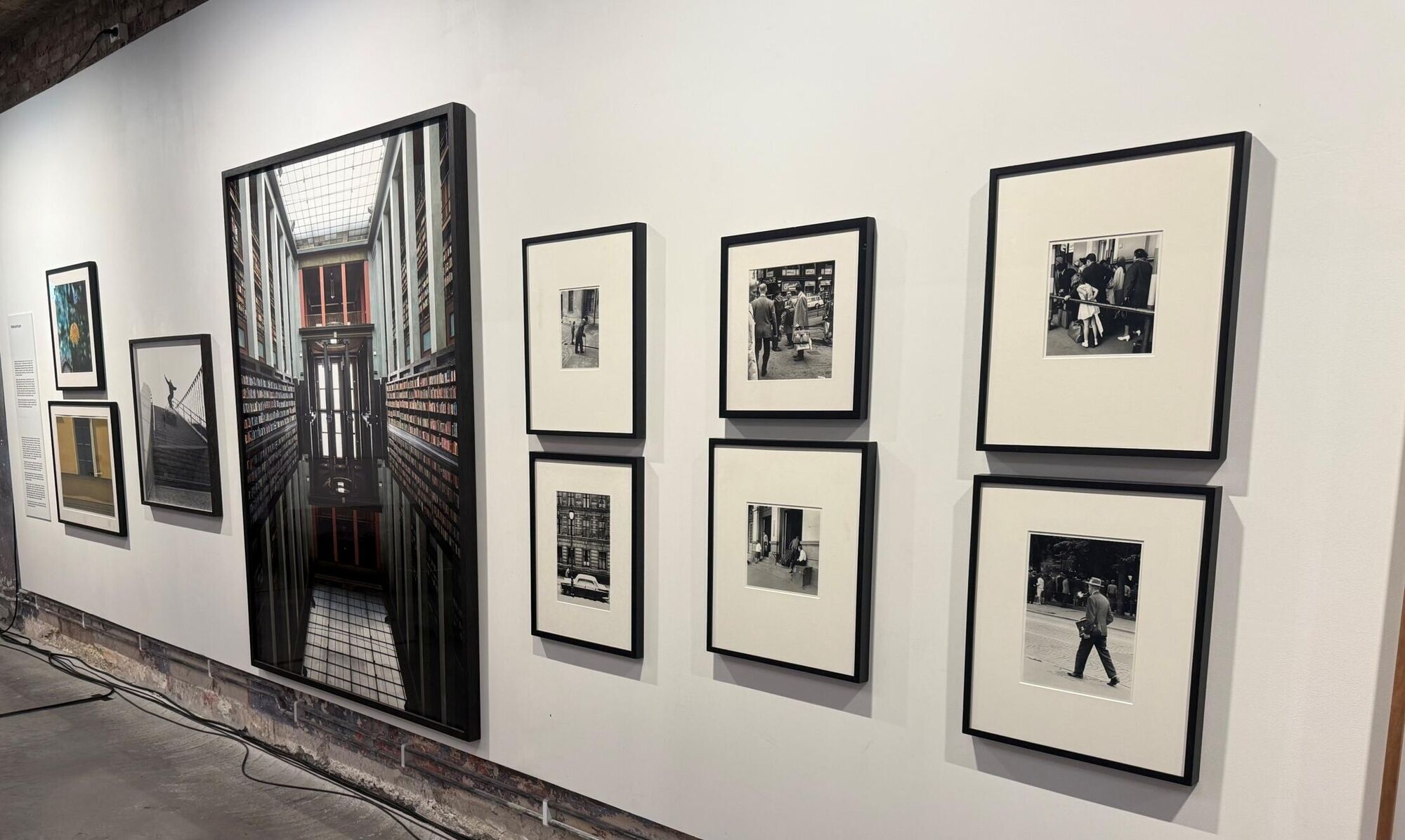
Oslo Photos, an exhibition in conjunction with Oslo Urban Week 2026
The ties between Møller Eiendom and the Møller Collection are close. The company borrows images from the collection for its properties, and at Deich, this collaboration is taken a step further. For Oslo Urban Week, the selection focused on images connected to Hammersborg and Oslo. The photographic gaze seeks out subjects consciously or unconsciously and allows us to see our city in a new light. Here, images from more recent times meet nostalgic flashbacks, giving rise to new narratives about a city in constant flux where Oslo as it looked yesterday and as it looks today are visible side by side.


The photographs in the Møller Collection reflect our lives. Individually and in various combinations, they constitute an inexhaustible source of stories: the fight against climate change, life-affirming moments, political commentary, trends and fashions, landscape depictions, and fleeting glimpses of everyday life. The collection consists exclusively of photographs and embodies the medium’s diversity, both in subject matter and technique. The images are both witnesses to their time and a tool for how we remember it.
In 1936, the French photographer Dora Maar (1907–1997) was in the city and captured parts of it through her lens. A Viking ship is photographed in what was once the Viking Ship Museum on Bygdøy, the site that still houses some of Oslo’s most iconic historical treasures.
Oslo in the 1960s comes to life, among other things, through the eyes of the dentist who never dared to pursue a career in photography, Bjørn Falk Andersen (1942–2018). Sving deg, Wm Thranes gate 2, Østbanen, Karl Johan by the Paviljon, Taxi Queue Oriental, Woman on the Town, the Storting, Grünerløkka, and Youngstorget are all signed by Andersen. From the same decade, we encounter the American Dan Young (1938–2014), who took Oslo to his heart, with *Salvation Army*, *Smoking Man*, *Aker Mekaniske Verksted*, *Salvation Army and Policeman*, *Woman Smoking a Cigar*, and *Norwegians, Holmenkollen* as well as his contemporary Arild Kristo (1939–2010), with *The Boys on the Corner* and *Tromsøgata*.
The collection also includes a somewhat unusual photograph by Morten Krogvold (b. 1950), Untitled from Stortingsgata, and Per Sundal’s portrait of King Olav V (1903–1991) at the Royal Palace. Both invite contemplation of a bygone era, while simultaneously prompting reflection on our own.
The dandelion sprouting where you least expect it *Militær løvetann* by Kjartan Slettemark (1932–2008) is not necessarily tied to Oslo, but nature’s tenacity in the midst of the urban landscape is a symbol of something we recognize from any major city.
Closer to our own time, we find Alexander Kalamakis’ (b. 1973) photograph of Torgny on the steps in front of the Y-block at Deichmanske. In a snapshot reminiscent of Cartier-Bresson, he captures Torgny’s leap just a split second before the skater, on a highly improvised skateboard, loses his balance. The photograph stands in stark contrast to the deadpan images from the Deichmanske Library by the German photographer Candida Höfer (b. 1944) cool, observational, without a hint of drama.
As a tribute to what once was and a promise of what Deich can become: *Gamle Deichmanske* by Per Barclay (b. 1955), reflected in the space between the library and the photo gallery.
