A Life in Pictures
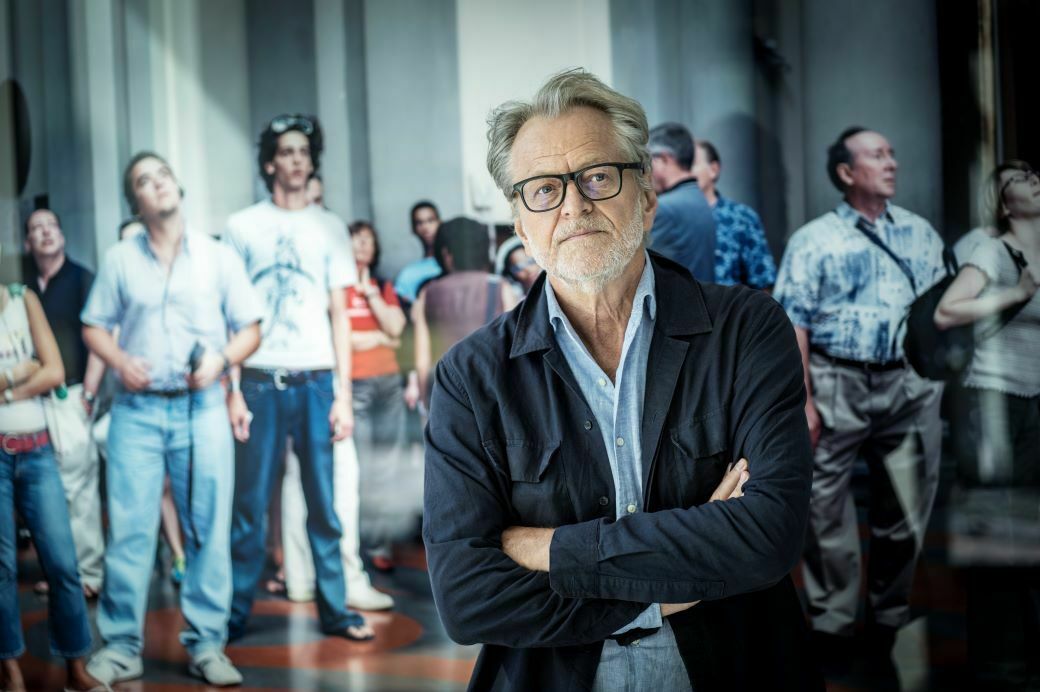
He remembers through images and sees life and history through the photographers’ lenses. Harald Møller has spent 50 years of his life collecting photographs. Now he is displaying more than 1,000 images on the digital art wall.
-I’m not a typical collector. It’s no problem to put together 150 photographs within a given framework and call it a collection, but I don’t find that interesting. And trophy photos—you know, the kind everyone feels they have to have—they leave a bad taste in my mouth. So how do I collect? I collect photographs by looking at them—for a long time. I zoom in and look for patterns in what appears to be chaos. If I like a photo, I hang it on the wall. After it’s been there for two weeks, I ask myself: Does it still tell me a story? If the answer is yes, then I buy it,” says Harald Møller.
For nearly 50 years, he has been collecting black-and-white and color photographs. Today, the Møller Collection comprises more than 1,000 photographs, images taken over a period of nearly 200 years. Today, Harald Møller is not alone in selecting photographs when new images are acquired; he is part of a photography group that includes owners, management, and employees of the family-owned company Aars.
The entire photo collection is now available digitally on the website mollersamlingen.no.
Let's get things rolling
Harald Møller’s grandfather founded Strømmen Auto 87 years ago. He secured the exclusive rights to import Volkswagen cars and introduced the “People’s Car” to the Norwegian public. Today, the automotive business is consolidated within the Møller Mobility Group, one of several companies owned by the Møller family through Aars. The family has also built significant businesses in real estate and asset management, and they are active owners of companies in a variety of industries. Aars is led by Øyvind Schage Førde, the great-grandson of Harald Møller’s grandfather. He is also deeply involved with the photography group and the collection. The companies under the Aars umbrella employ a total of 9,000 people in Norway, Sweden, Finland, Denmark, and the Baltic states.
The family is committed to creating value, even beyond the financial realm. Photography has become increasingly important and is an area Harald Møller is truly passionate about.
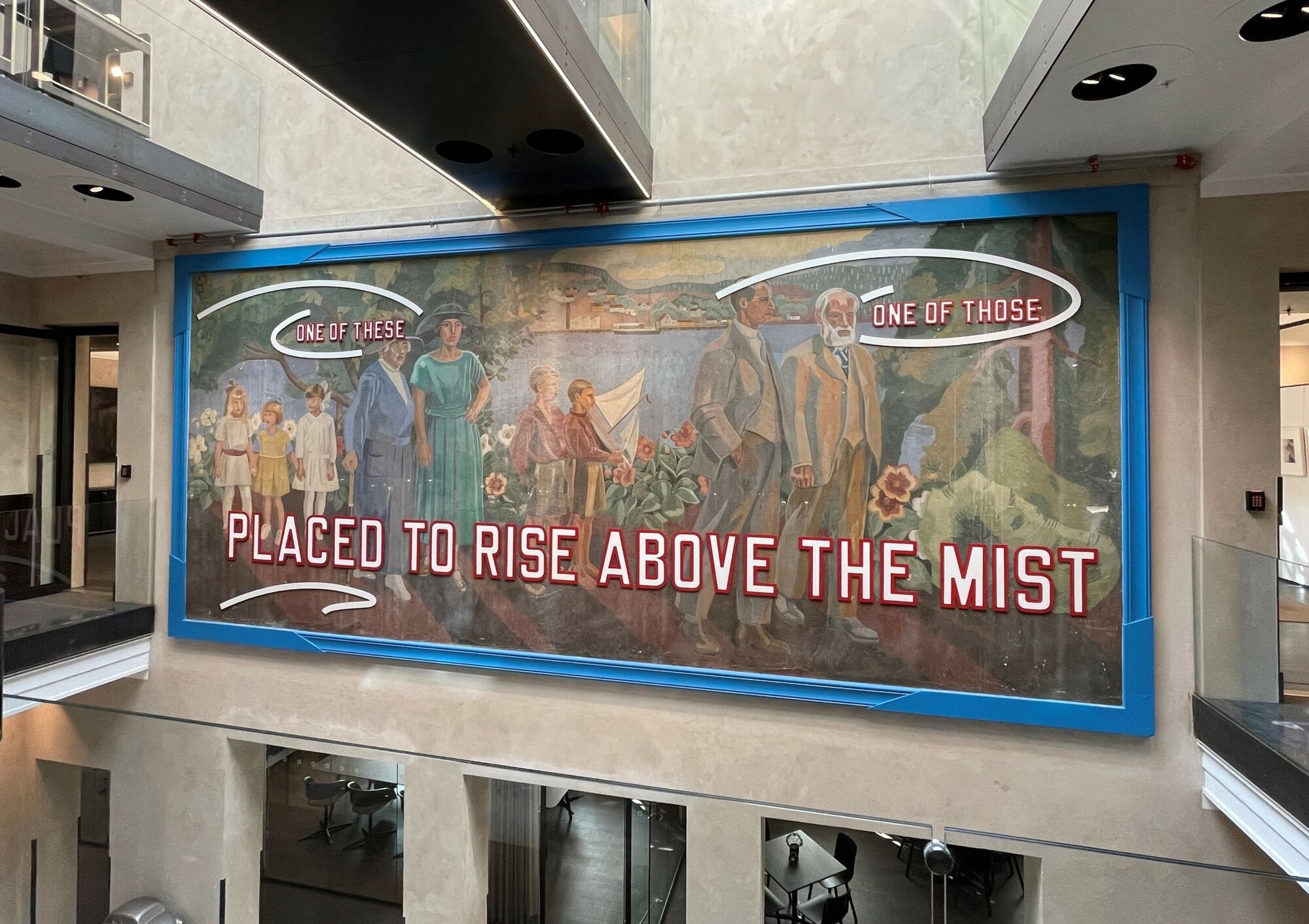
In the historic Fram building from 1921 on Bygdøy Allé in Oslo, where Aars has its headquarters, there are photographs hanging everywhere. Hundreds of them. On every wall. With one exception: The first image you encounter when you step into the large hall is a gigantic painting—a fresco—painted directly on the wall by the artist Dagfin Werenskiold. The painting is typical of the 1920s and depicts a father, son, and grandson looking forward. A few steps behind them, the women walk without a clear direction.
“That’s no longer the case, and for us it represents an outdated view that is incompatible with our philosophy or the values we uphold in our family and our ownership.” “I expressed this when the artist Lawrence Weiner (1942–2021) visited here back in 2017. The following year, he contacted me with an idea for how we could shake things up a bit,” says Harald Møller, referring to how the artwork appears today.
Sparking Conversations
Harald Møller estimates that more than 400 of the collection’s over 1,000 photographs are displayed on the walls, either on Bygdøy Allé or in other buildings where Aars operates. The collection of photographs provides a comprehensive historical insight into photography as a medium and includes a number of Norwegian and international photographers. The photographs are rotated on a regular basis.
“They’re sensitive to light. After a period on the wall, they have to be moved into a dark room to rest,” he explains.
“Why are you so fascinated by photography?”
“As a person, I’m image-driven. I think in images. When I Google something, I look at the pictures first, then the text. I’m left-handed, went to a Steiner school, and remember things in images—so there you have me. And I also find it fascinating how photographs spark curiosity and spark conversations between people.” Photography is about injustice, politics, exclusion, how we treat our planet—about what it means to be human. By hanging a photo on the wall, we share a story, he says.
Lise Klaveness in Kigali
-How long can you look at a photo?
-Most photos I only spend a second on. Other photos invite closer study. They have to have something visual about them, something that makes you stop and look. What’s behind this umbrella, for example? These feet, this wheel?
He turns and points to a black-and-white photograph on the wall by the photographer Alp Sime, titled “Umbrella.” Many of the photos in the Møller Collection are like this one; filled with details that require concentration to be noticed.
“Or this photograph—it wasn’t until I saw it in large format that I noticed the woman in the picture,” he says.
On the wall hangs a color photograph of a diving board, taken by the American photographer Joel Meyerowitz. In the right-hand corner, a woman in a green sunhat can be glimpsed. She is sitting with her back to us, looking out over the ocean.
“Not all photographs are art, but every now and then, one is,” he says.
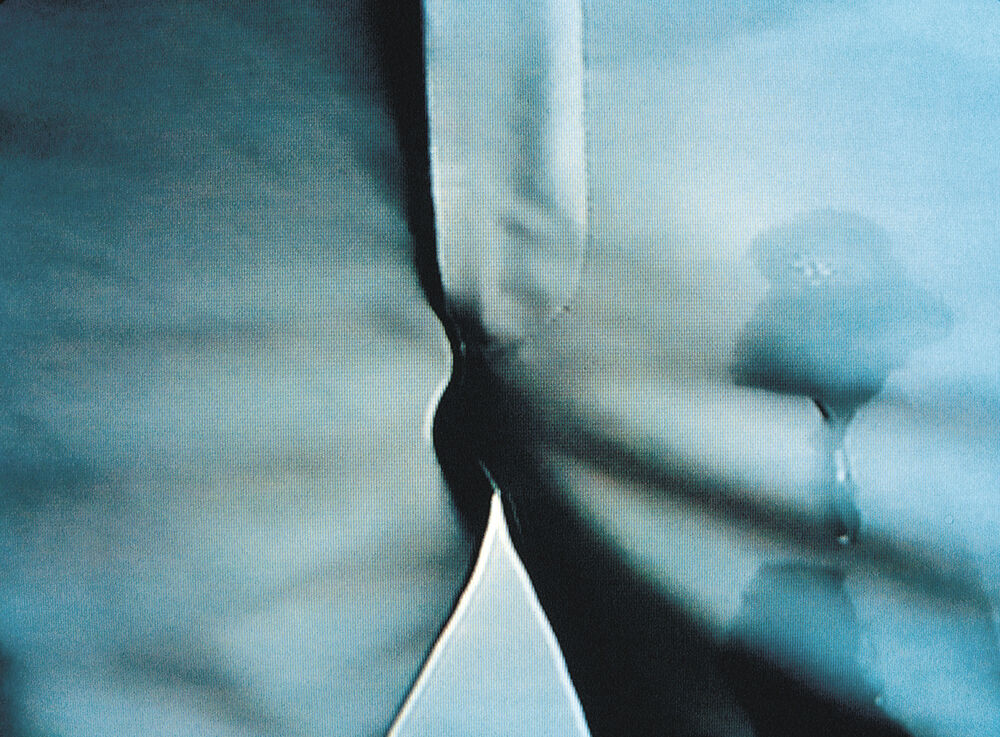
Inside the office of Andreas Jul Røsjø, head of Møller Eiendom, hangs a photograph by the Norwegian photographer Knut Åsdam. The photo bears the telling title “Pissed.” It shows the crotch of a man in blue pants with a visible accident on the outside.
“A lot of people have questions about this, yes. It gets the conversation going,” Røsjø chuckles.

-What makes a photograph art?
- That’s an interesting question, but I don’t have the answer. Is it art when you put a photo in a mat and frame and hang it on the wall? Is it art when the photographer calls himself an artist? Is it art if the photos are curated? And some news photos achieve art status, says Møller, pointing to one of the most recently acquired photographs in the collection: a news photo of Lise Klaveness, president of the Norwegian Football Association, at the FIFA conference in Kigali in 2023. The photograph was taken by Paal Audestad.
“This is a photograph that tells a story; it sparks discussion. I’m convinced it will stand the test of time, even when the viewer doesn’t know who Lise Klaveness is. But is it art? I don’t know.”
A Powerful Medium
Harald Møller’s fascination with photography began in his boyhood bedroom in the 1960s, when he sat poring over his parents’ copies of National Geographic and Life Magazine. Through National Geographic’s yellow logo, ten-year-old Harald gained a glimpse into the world outside, with powerful visual impressions from the Vietnam War that raged year after year.
“I didn’t know English back then, of course. Instead, I just flipped through these magazines over and over. Page after page, the images burned themselves into my retinas. That’s how I became captivated by the stories hidden within a photograph. Through these images, I discovered the world out there,” he says.
At the age of 27, he bought his first photograph. It was a photograph by the Norwegian photographer John Stenersen, purchased at Fotogalleriet.
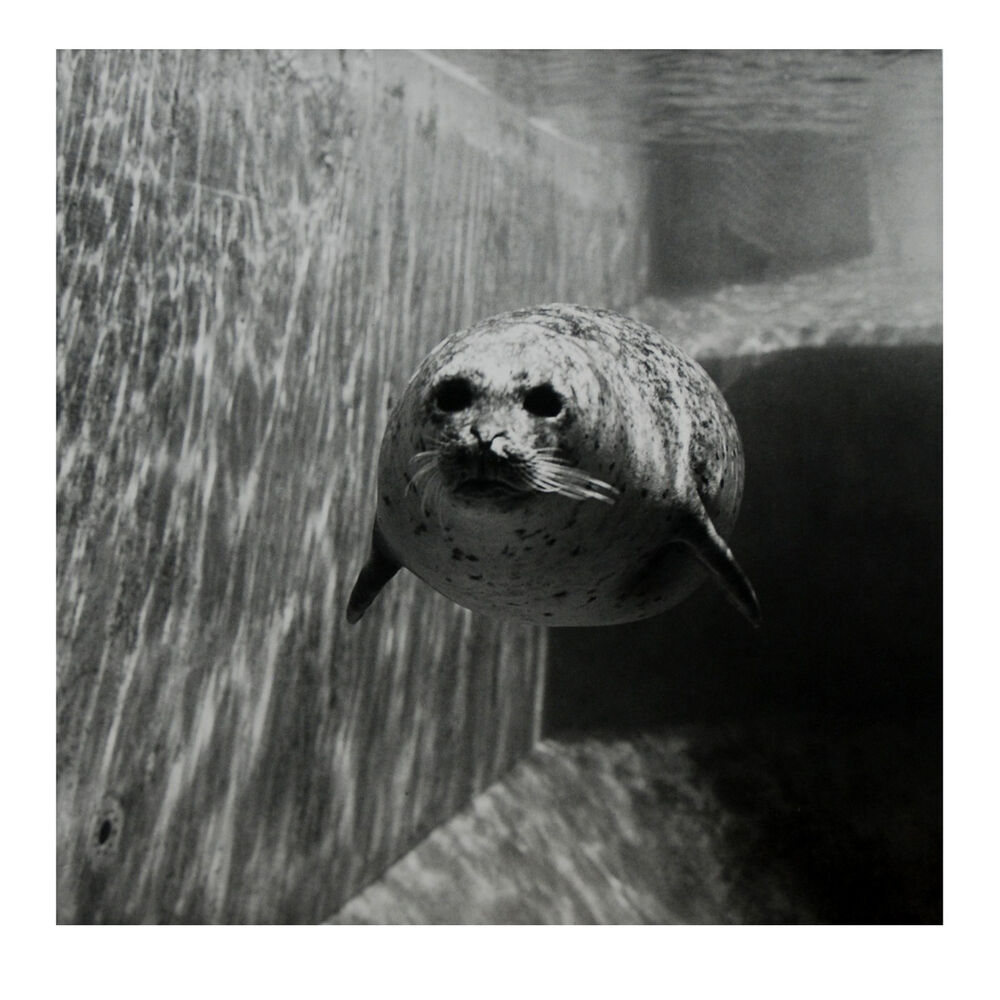
“But the very first photograph that I truly felt drawn to andwanted to buy was Per Maning’s photograph of the seal ‘Oscar’ from 1988. But I didn’t think I could spend that much money on a photograph,” he says.
In a black-and-white photograph, the seal Oscar is personified through rounded forms and a dark, inscrutable gaze, contrasted with the hard, straight pool walls along which the seal swims. This photograph later set a sales record for Norwegian photography when it was sold at auction at Blomqvist.
A few years later, however, Oscar the seal became part of Harald Møller’s collection. Today, a large-format print of the photo hangs in one of Aars’ meeting rooms on Bygdøy Alle.
“I received another print as a gift from good friends when I turned 50,” he smiles.
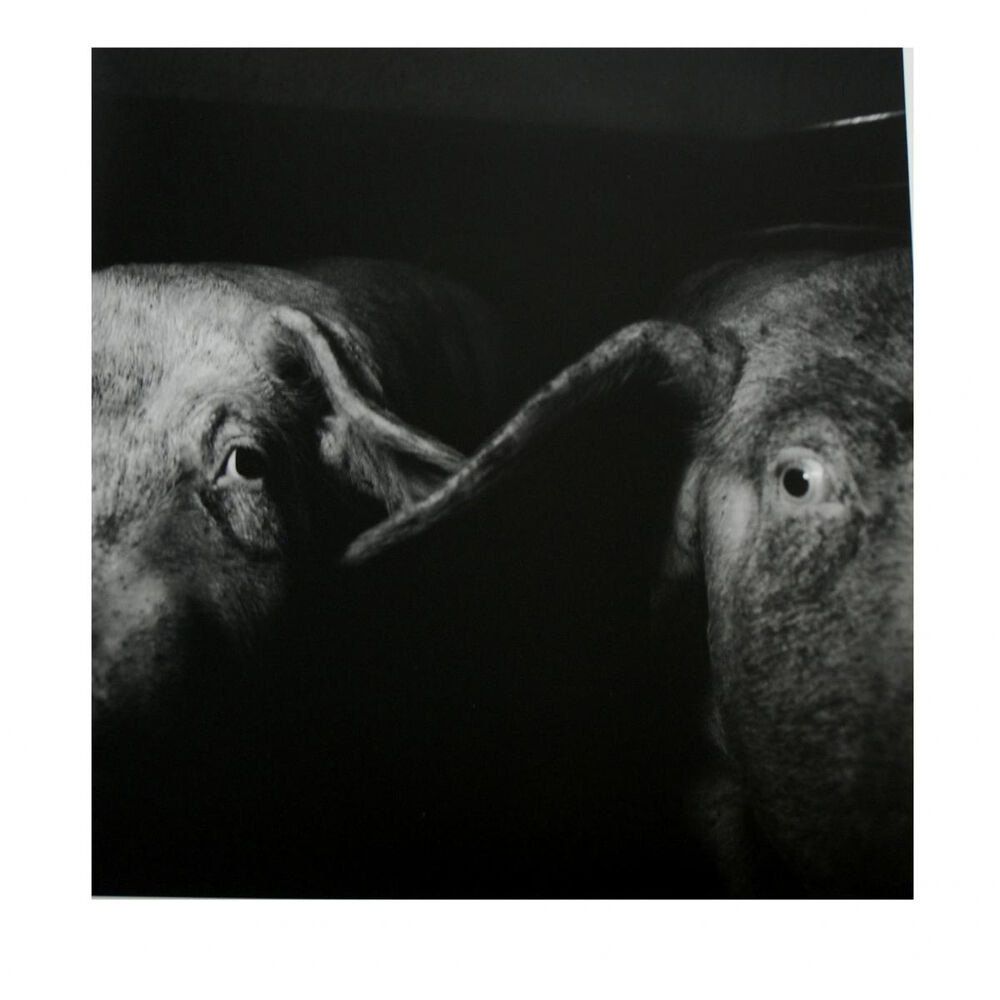
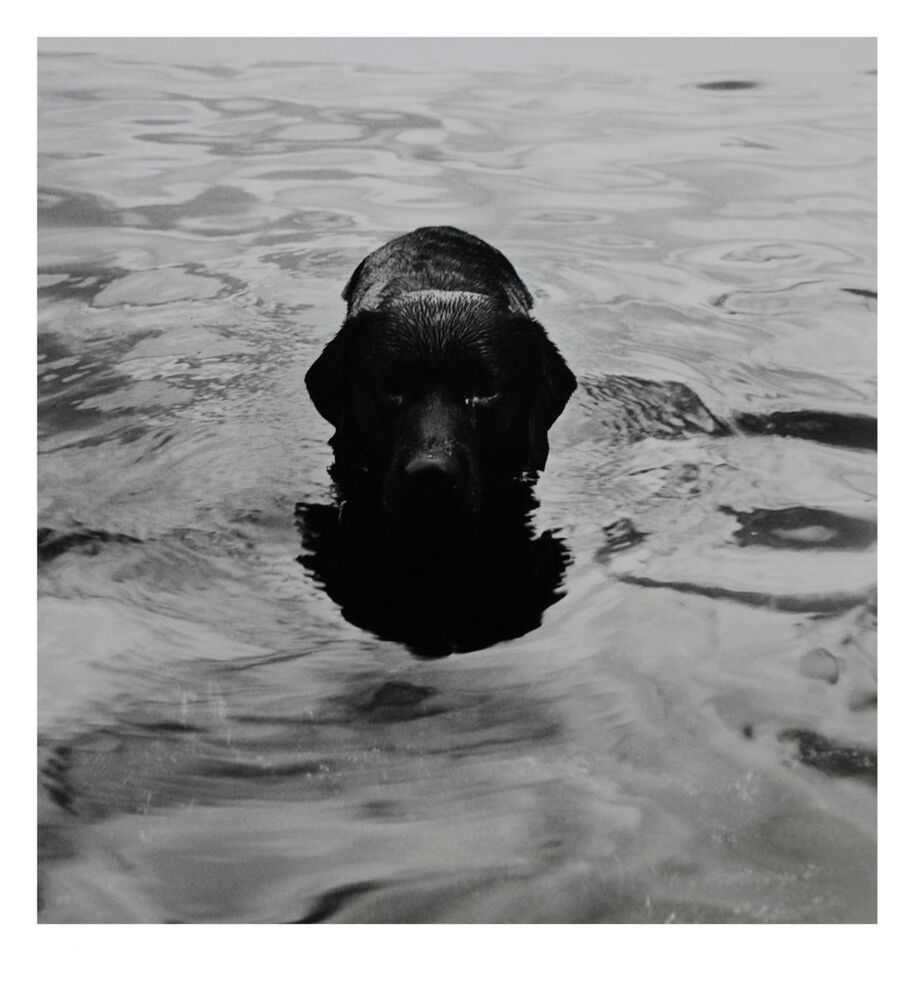
The Møller collection now consists of ten additional photographs by Per Maning, all depicting different animals.
The Tank Man
Walking from room to room in the Fram compound, from floor to floor, alongside Harald Møller as he points out photographs, pauses at some of them, comments, and recounts stories, is like a journey through stories and history. The photographs serve as clear points of reference in his life and organize historical events spanning many decades—as seen through both his eyes and those of the photographer.
“These photographs were acquired primarily because they resonated with me. They aren’t photographs purchased to represent a single photographer, an era, or a theme. In that sense, the images branch out in many directions, just as life is multifaceted,” says Harald Møller.
Hanging on the walls of Fram Farm are photographs taken by the Swedish photographer Christer Strömholm of children born with radiation injuries in Hiroshima. There are photographs of American immigrants from the 1920s, forest scenes from Eggedal, and everyday scenes from Moscow in the 1970s. There are images of nuclear test explosions in the Pacific Ocean and the photograph of “The Tank Man” from Tiananmen Square in 1989.
In 2005, approximately 400 photographs from the collection of Tore Holter, former editor of the magazine *Fotografi*, were acquired. In many ways, this marked the beginning of Møller’s photography collection, even though some acquisitions had already been made previously. For the past ten years, art historian Nina Sørlie has curated the collection.
- It has been a pleasure to follow her work in managing the collection. Through her efforts, I have rediscovered many of the photographs and seen them in a new light and a new context. And I have likely also been exposed to a broader field within photography, perhaps swallowed a few camels, and, in addition, sparked an interest in photography among many colleagues.
Beautiful and Grueling
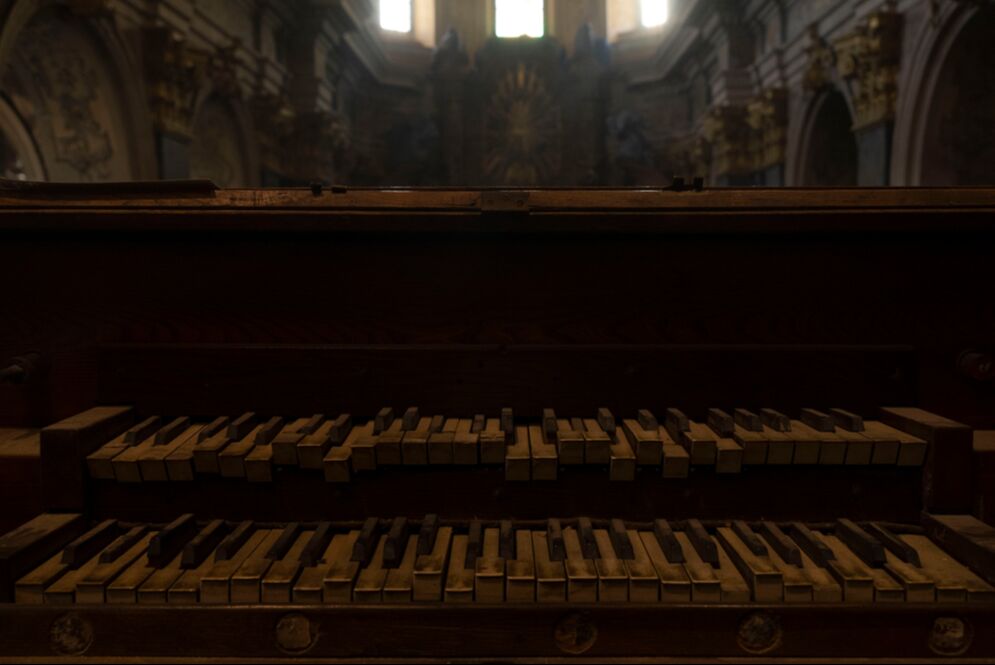
One of the most recently acquired images in the Møller Collection is a photograph by Cheng-Chi Chang depicting a destroyed and dust-covered organ keyboard, taken in a church in Lviv, Ukraine, after the war broke out in 2022.
Other images in the collection, however, are too graphic. A photograph by the Mexican photographer Enrique Metinides shows a woman who was killed in a car accident in 1979. The photograph conveys a tragic event in a cold, objective manner. It used to hang on the wall in the Fram House.
“The photo is both beautiful and gruesome at the same time. There’s something about it. But we had to take it down from the wall. Some of our employees found it too hard to look at,” he admits.
Some photographs take on new meaning, a new context, when viewed in relation to other events. In the Møller Collection, there is a large black-and-white photograph by Tom Sandberg depicting the photographer’s daughter as an infant. In the image, the child lies on a beach, her hairless baby head facing forward and her face buried in the sand.
“We had to take it down from the wall when the image of the drowned Syrian refugee boy who was washed ashore on a beach in Turkey went viral in 2015. That harrowing image of the dead boy gave Tom Sandberg’s photograph a completely different meaning. It became too strong an association for many people,” says Møller.
Trophy Photos
-Are there any photos you wish you owned but don't?
-I don’t have any photos I absolutely have to have , but there’s one I didn’t get to buy. I held it in my hand for 20 years. I was so close, he says, holding his thumb and index finger close together.
The photograph is titled “It’s Just Life” and was taken by the American photographer William Eggleston. The photo was taken in Mississippi in the 1970s, and it shows a white man and his Black driver—two steps behind. Eggleston was from the Southern United States and grew up amid racial segregation.
“It’s an incredibly powerful image. I wanted it, but at the time I thought it was far too expensive. Today, the photo costs at least ten times as much. And while I can technically afford to buy it now, I don’t want it anymore. If I bought it today, it would become a trophy photo. And I don’t want that,” he says.
But sometimes even Harald Møller can’t resist buying trophy photos. A few years ago, he purchased the iconic photograph “Sleeping Woman” by the American artist Man Ray.
“When the Henie Onstad Art Center showcased photographs from the Møller Collection in the exhibition ‘Eksponert,’ ‘Sleeping Woman’ was included. An Israeli art professor saw the photo at the exhibition, and he declared, ‘That’s a forgery,’ ” Møller recounts.
The professor’s claim that it was a forgery caused a stir.
- It was a shock. The issue of forged Man Ray photographs has been a major concern in the art world. We spent an entire year and considerable resources investigating whether there might be any truth to the claim that the photograph was a forgery. Eventually, we received an assessment from experts in the U.S. that refuted the claim of forgery. It was a genuine Man Ray, and the art professor retracted the claim.
A Family Affair
Another famous image in the collection is the photograph “Gold Mine of Serra Peleda” by Sebastião Salgado, taken among gold miners in the Amazon in 1986. The image shows thousands of men in a mud pit; it’s raining, and they’ve loaded mud into sacks they’re carrying on their backs. There may be gold in the mud—the key to a better life.
“A few years ago, a gallerist in Paris offered to sell it to me. The photograph was a small format, which is what I wanted. It was a vintage print and extremely rare. I took it out of the frame—I always have to do that—to look at the image physically and hold it up to the light. And that’s when we saw it.”
-So what happened?
-Unfortunately, the photograph was damaged. I couldn’t buy it, he says, adding:
-“But our interest was still there, and we have plenty of time. As luck would have it, we were offered a similar print a little later.”
Today, new photographs for the Møller Collection are acquired by the photography group, consisting of family members spanning several generations and colleagues from companies owned by Aars. Harald Møller is pleased about that.
“It’s become a family affair, where we travel to Paris together for photo exhibitions, discuss, agree, and disagree. The collection is evolving, while my story remains at its core,” he says.
He is now making more than 1,000 photographs available to everyone through the digital publication of all the images on the photo collection’s own website. Just search for “Klaveness,” “Gold Mine,” or “Pissed,” and there you are—on the walls of the Møller Collection.
Photo by Harald Møller: Ole Berg-Rusten/NTB; the photo of the fresco belongs to Aars, and the rest of the photos illustrating the article are from the Møller Collection.